WordPress Developer Ukraine, Kyiv
WordPress: Add Parent Term Slug to Child Term URL

WordPress: Add Parent Term Slug to Child Term URL

WordPress: add the parent term slug to child term URLs By default, terms of a custom hierarchical taxonomy do not include the parent slug in their URL. A child term “Lorem” under the parent “Test” gets the URL /topics/lorem/, not /topics/test/lorem/. Adding the parent slug gives cleaner, more descriptive URLs that reflect the hierarchy.

Gutenberg: Troubleshooting “Updating Failed” Errors

Gutenberg: Troubleshooting “Updating Failed” Errors

Gutenberg: troubleshooting “Updating failed” errors The Gutenberg editor saves posts through the REST API. When saving fails, the editor shows a generic “Updating failed” banner that gives no clue about the actual cause. Here are the five most common reasons and how to fix each one.
WordPress: Layout Broken by Unexpected HTML Tags in ACF Fields

WordPress: Layout Broken by Unexpected HTML Tags in ACF Fields

WordPress: layout broken by unexpected HTML tags in ACF fields A layout looks perfect on localhost but is broken on the staging or production server. The template code is the same, Git is in sync. The culprit is often invisible: a content editor copied text from another website or a Word document and pasted hidden…
How to Enqueue a Script After All Other Scripts in WordPress

How to Enqueue a Script After All Other Scripts in WordPress

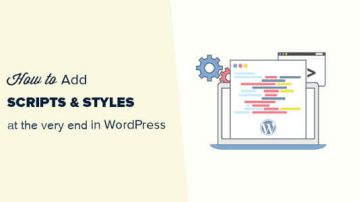
How to enqueue a script after all other scripts in WordPress By default, WordPress prints scripts in the order they are enqueued, taking dependencies into account. Sometimes a script must run last, after jQuery and everything that other plugins have added to the page. The dependency list, a late hook priority and the wp_footer hook…
Essential WordPress Plugins Every Site Should Have

Essential WordPress Plugins Every Site Should Have

Essential WordPress plugins every site should have After years of building and maintaining WordPress sites, a short list of plugins earns a place in almost every project. They solve real, recurring problems (security, performance, SEO, forms, backups) without introducing bloat or vendor lock-in.
Advanced Custom Fields: Getting Started

Advanced Custom Fields: Getting Started

Advanced Custom Fields: getting started Advanced Custom Fields (ACF) is one of the most popular WordPress plugins. It adds fields to the edit screens of posts, pages, users, terms and options pages through a visual interface, and gives a simple API to read the values in templates. Instead of the bare “Custom Fields” box with…
WP_Query: Advanced Techniques and Common Patterns

WP_Query: Advanced Techniques and Common Patterns

WP_Query: advanced arguments for real projects WP_Query is the main way to get posts in WordPress. Beyond post_type and posts_per_page it can combine taxonomy conditions, filter by custom fields and dates, sort by a field and exclude posts. These are the patterns that come up in almost every project.
Using the WordPress REST API as a Headless CMS Backend

Using the WordPress REST API as a Headless CMS Backend

Use the WordPress REST API as a headless CMS backend In a headless setup WordPress is only the place where content is written and stored. The site that visitors see is a separate application, for example in React or Vue, that reads the content through the REST API. Editors keep the familiar admin, and the…